




For speech-language pathologists
What this is, what it is not, and what is not finished.
Home practice between sessions. It does not assess, and it will not tell a child they said a word wrong.
What a family actually sees
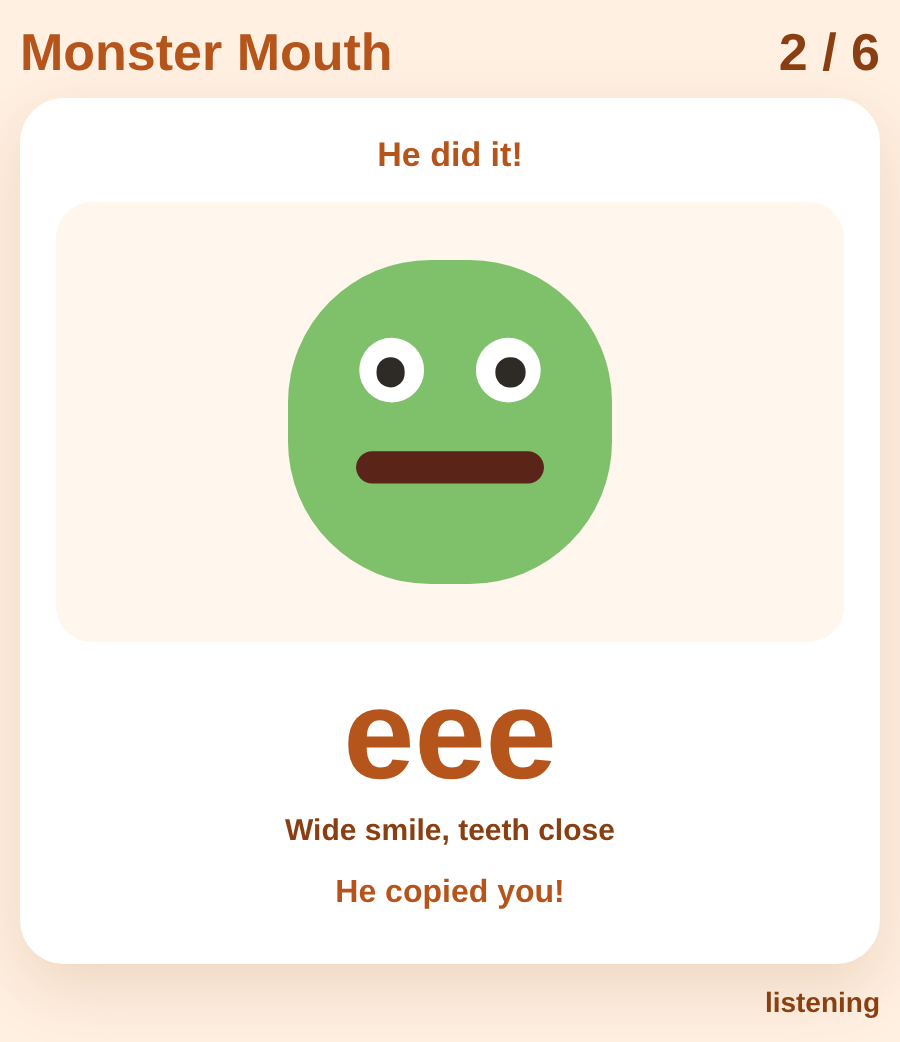
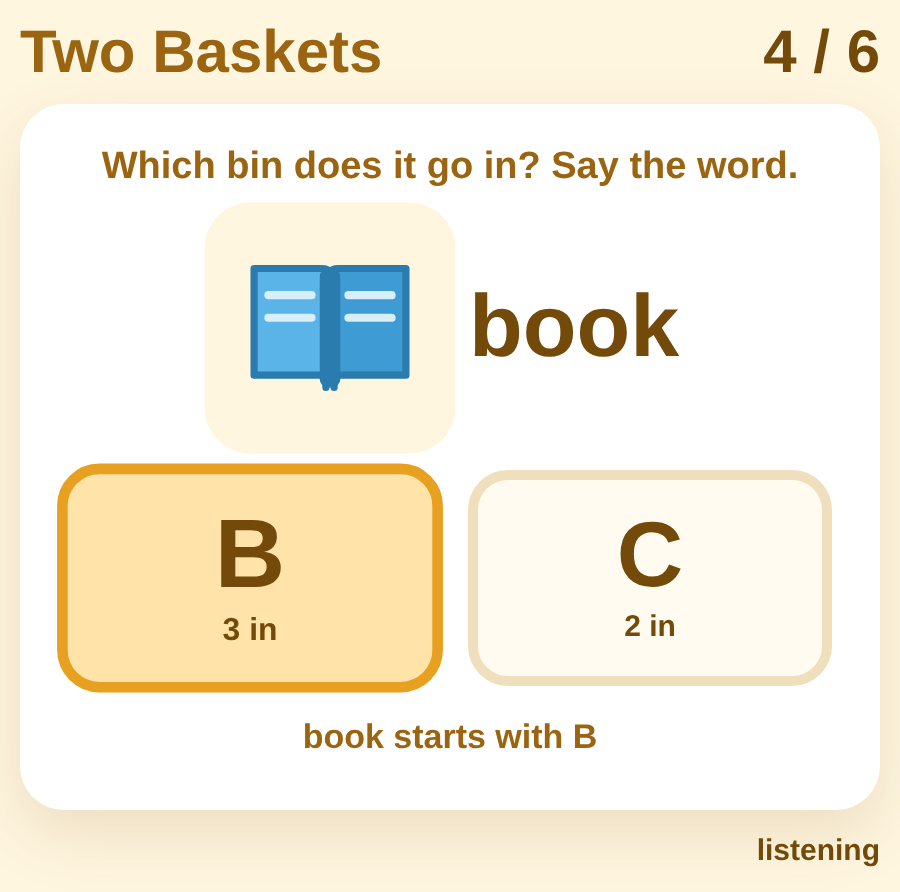
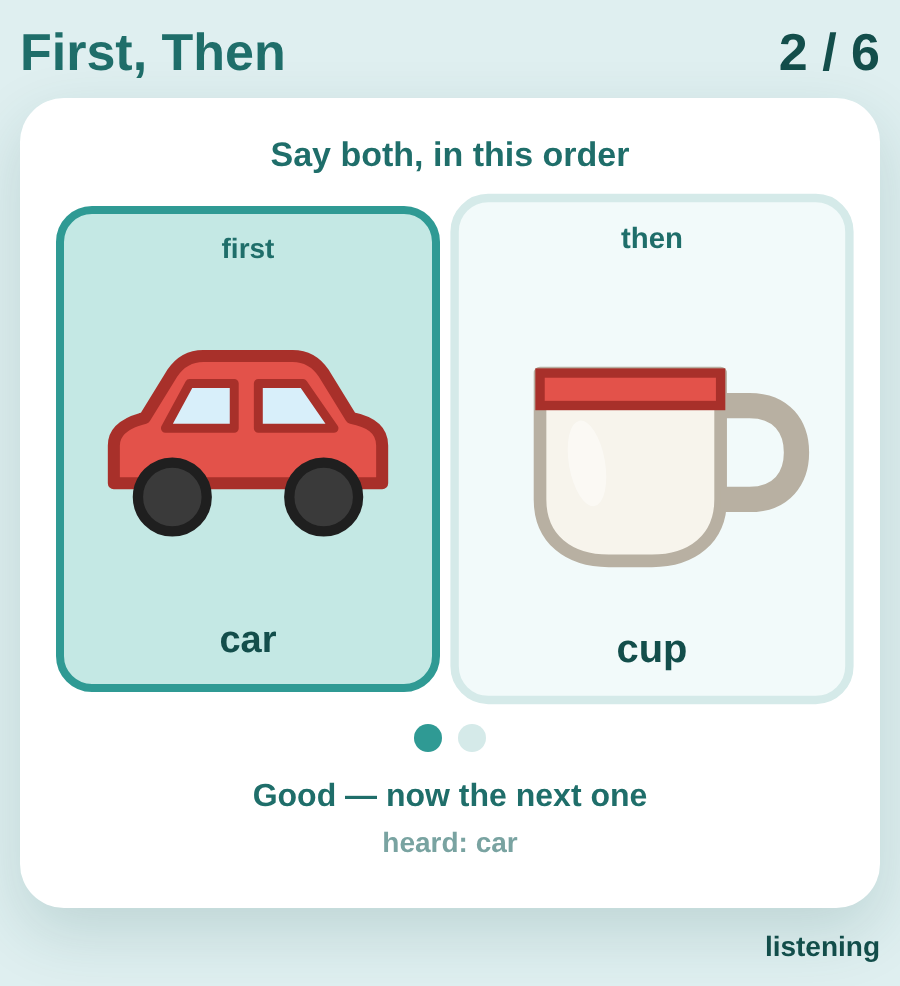
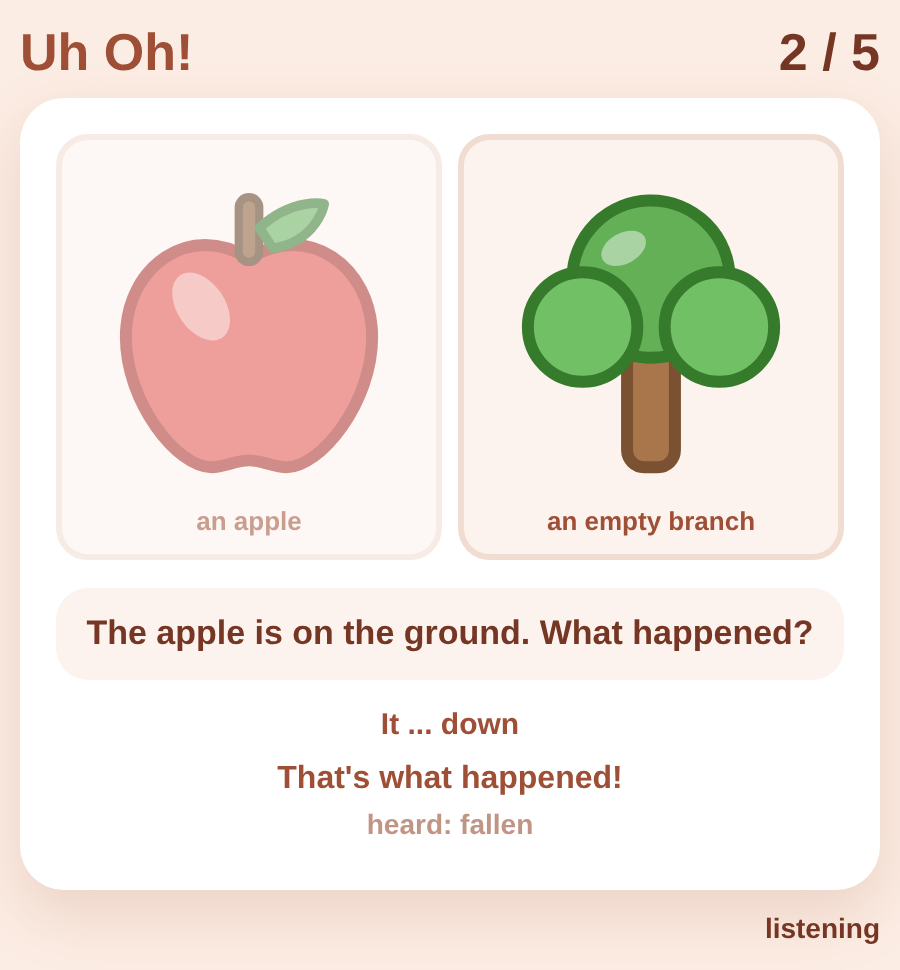
First
The limits, before the features.
It does not diagnose.
No score, level, percentile or severity exists anywhere in the product. The intake questionnaire outputs a practice plan, never a result about the child.
Coaching copy and the viseme set are not signed off.
Progression logic and every mouth shape need licensed SLP review before release. That review is not complete.
The developmental-norms table is an engineering default.
It stops the scheduler targeting a sound a child is too young for. No claim about children is made anywhere on this site.
No audio is recorded or transmitted.
Nothing in the product accepts a recording, and no recogniser is connected to one.
It is not a screening tool.
If a parent asks whether the app said something was wrong: it did not, because it cannot.
There has been no external validation.
No trial, no published outcome data, no peer review. Treat it as a motivation surface, not as evidence.
The decision that matters clinically
A child who cannot be understood still moves the story forward.
What decides the next moment
What they were asking for, and nothing else.
The child says they want to go to the red planet. The rocket goes to the red planet. It goes whether the word arrived as “red”, “wed” or “wewwo”, and nobody in the game remarks on which.
What the production changes
What the world offers later. Never what it does now.
A noticed approximation shapes which creatures turn up next week and which words are within reach when they do. It gets no vote on the present, so the child never experiences it as a consequence.
Hold the meaning fixed, sweep the pronunciation result across its entire range, and the story does the identical thing. nine behavioural tests assert that, and the build does not ship if one of them stops being true.
Coverage
Six domains, not articulation alone.
Being understood
10 games
saying single words clearly, hearing the first sound in a word, where the tongue and lips go, hearing rhymes, hearing the beats in a word, keeping the quiet syllable in
More words
7 games
colours, sizes and amounts, naming things, words for where things are, copying a word back, making sound on purpose, number words
Putting words together
7 games
asking for what they want, one and more than one, two things in one sentence, describing something, joining two ideas, talking about what already happened
Listening and following
2 games
giving and following directions, following two steps in a row, what happened first, then next
Back-and-forth
4 games
taking turns, hello, goodbye and please, trying again when not understood, using language with people, answering who, what and where, remembering and retelling, saying why, telling what happened
Willing to try
3 games
loud and quiet on purpose, the tune of a sentence, leaning on the word that matters, which part of a word is loud
Zones are delivery surfaces, never mapped to target sounds: the scheduler alters what appears inside the world the child already chose.
Reinforcement language
Your client will never hear any of these words.
The same applies to what the game is able to do at all. There is no way for anything in it to put a score on the screen, show a correction, display the word it was hoping for, or ask a child to try again. Those are not discouraged. They are absent, and a line of character dialogue that asked for one would be discarded before the game saw it.
Using it with a family
What to tell a parent on your caseload.
Rounds are 30 to 90 seconds.
The intake asks a parent how long a bad day allows — five, ten or fifteen minutes — and builds the week to that number rather than to an ideal one. Two rounds in the car is a legitimate answer.
Missing a fortnight costs nothing.
There is no streak, no reset and no number that goes down. A family who stops and comes back finds exactly what they left.
It says out loud that it is not you.
When a parent tells the intake they are seeing a therapist, waiting for one, or booked for an evaluation, the plan they are shown states in writing that this runs alongside therapy, not instead of it.
You cannot set the targets.
There is no clinician login and no way to hand the scheduler a target sound. It selects within a developmental default. If a specific target matters for a client, treat this as home motivation, not as a home programme.
Working with us
If you have found something wrong here, tell us.
Every absence described above is also listed with the place in the code it lives, if you would rather check than take our word for it, and what is coming next is published as well.